Competition Boxing Ring: Sizes, Specs, Cost and How to Choose One (USA Buyers Guide)
11 min read
If you are putting on a fight card, a tournament, or a serious amateur show, the ring is the one piece of equipment nobody can improvise. Fighters, officials, and the commission all judge your event by it. A competition boxing ring has to be the right size, hold up under heavy use, go up and come down without drama, and look professional under lights and on camera.
This guide covers what a competition boxing ring actually is, the sizes you will see, what should be included, how the rules work in the USA, what drives the price, and the questions to ask before you order. If you want to see our range first, you can browse our custom boxing rings, made in sizes from 12 ft to 28 ft.
Quick Answers
-
What is a competition boxing ring? A boxing ring built to the size and safety standards used for sanctioned amateur and professional bouts, usually with a raised platform, four ropes, padded corners, and a tight canvas.
-
What size is it? Most competition rings are between 16 and 20 ft inside the ropes. The platform is larger, often by around 4 ft, because it includes the apron outside the ropes.
-
Elevated, lowboy, or floor? Elevated rings are the classic choice for events. Lowboy and floor rings are better for training.
-
Who decides what is allowed? Your sanctioning body or state athletic commission. Always confirm their rules before you order.
What Is a Competition Boxing Ring?
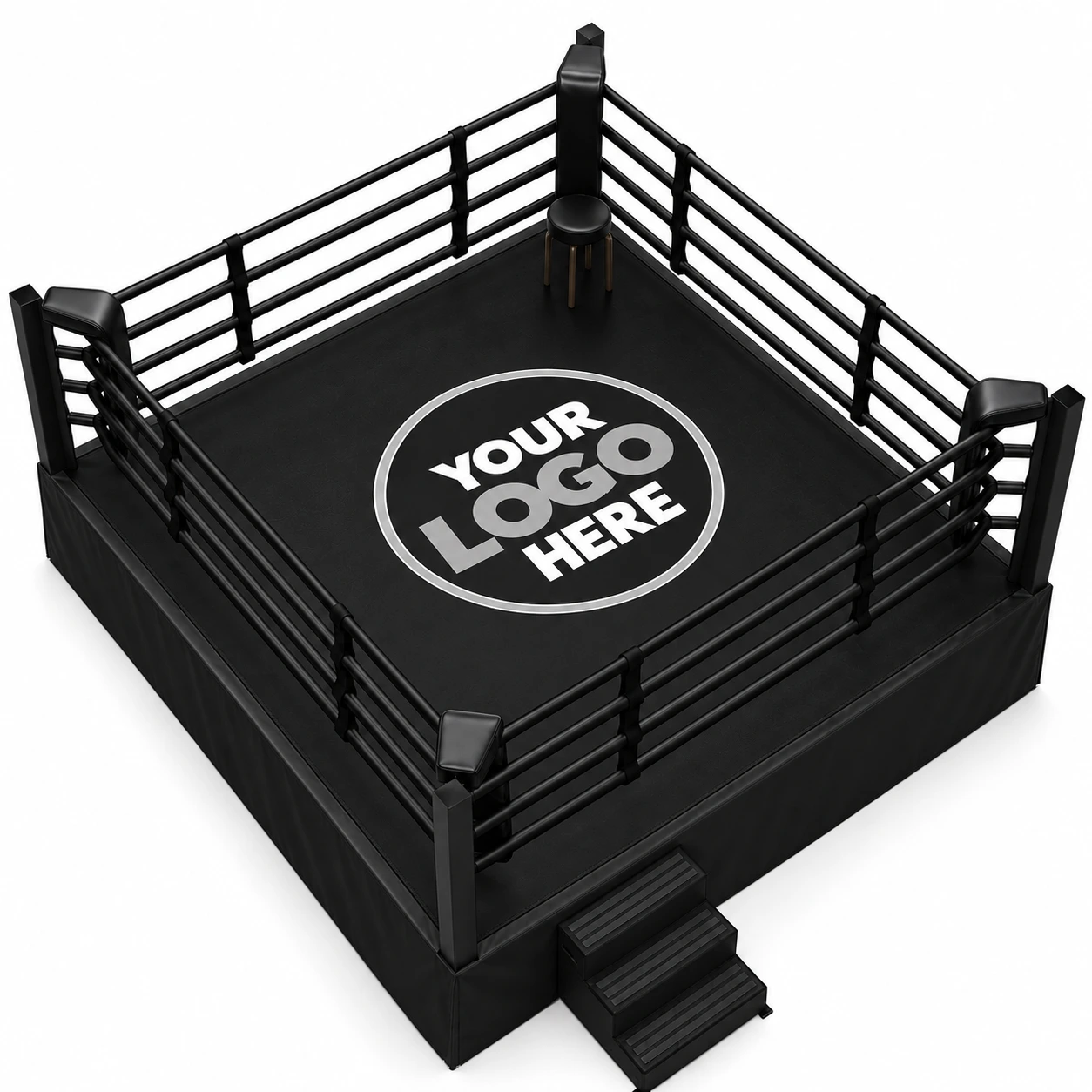
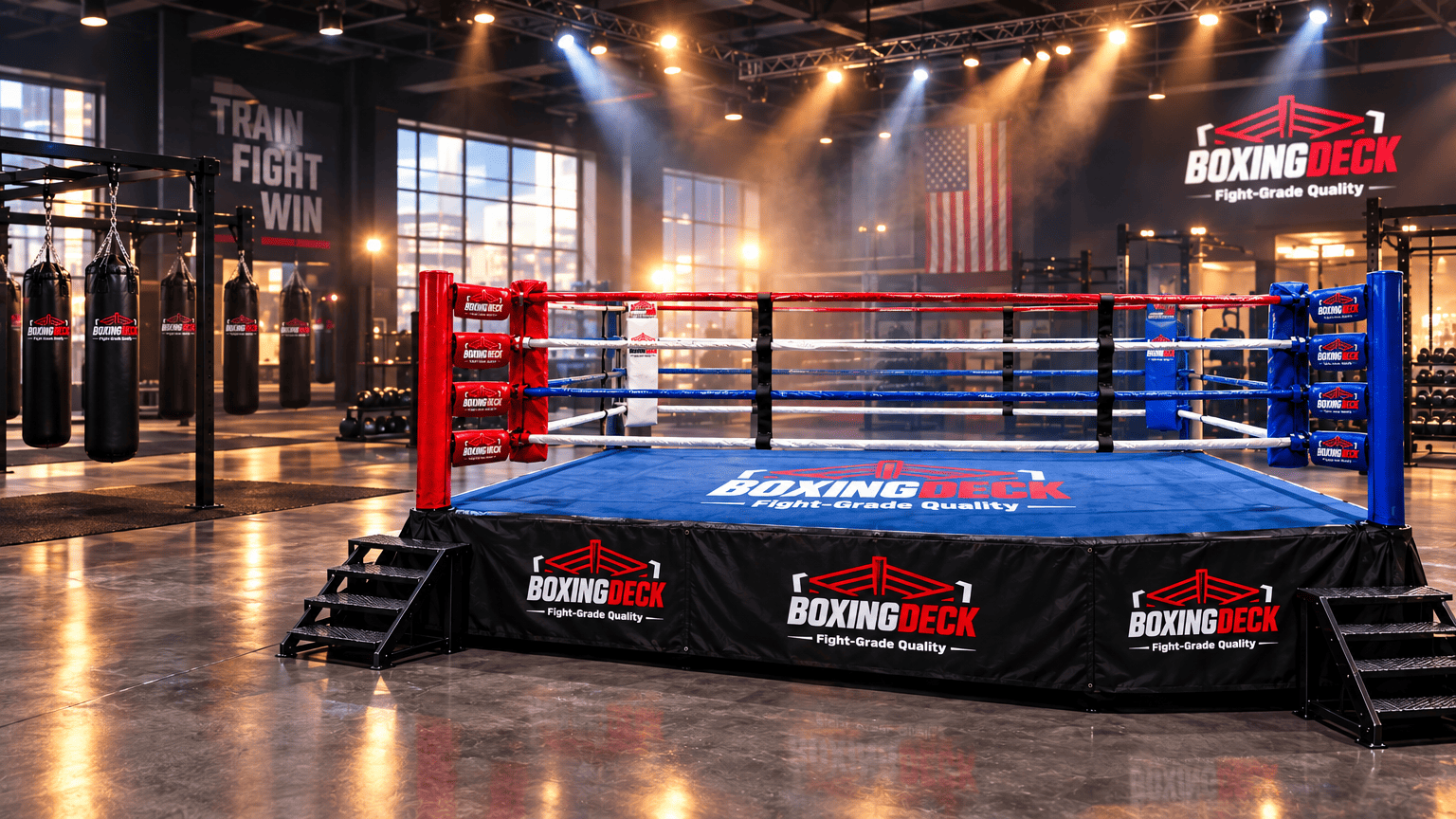
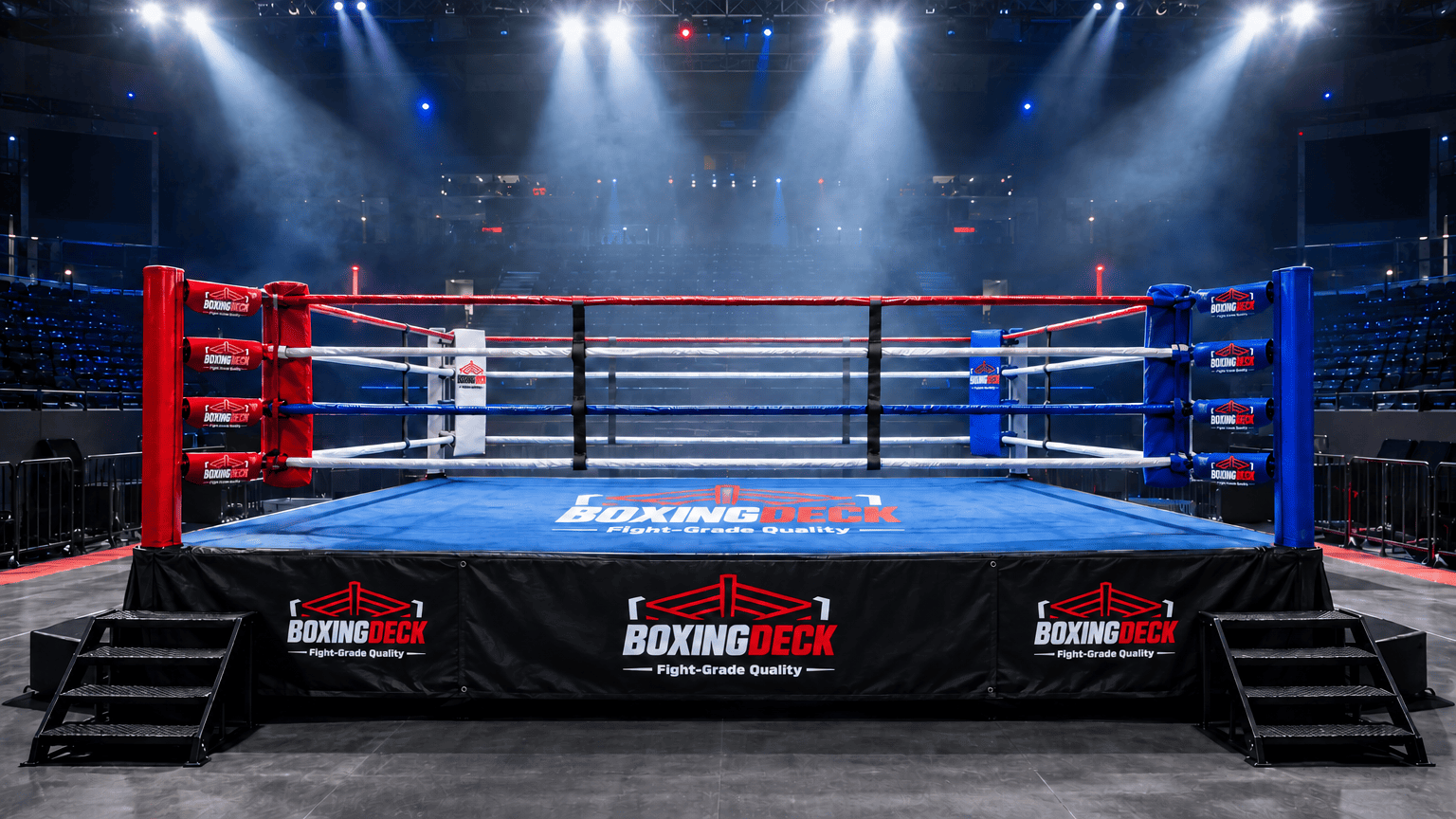
A competition boxing ring is the ring used for official bouts. It is not just a bigger gym ring. It follows the size, rope, padding, and platform rules of the body that sanctions the event, and it is built to be set up, used hard for a night or a weekend, and taken apart again.
A gym ring is mainly built for daily sparring and classes. A competition ring has to do that too, but it also has to look right for spectators and officials, give judges and cameras a clear view, and meet the rules of the event. That is why most competition rings are raised platform rings.
Competition Boxing Ring Sizes
Ring size is where most buyers get confused, so it is worth being precise. There are two numbers: the size inside the ropes (where the fight happens) and the size of the platform (the whole floor, including the apron outside the ropes).
Builders and venues do not always use the same one when they say "a 20 ft ring." Always ask which measurement is meant. As a common rule of thumb, the platform is around 4 ft larger than the fighting area, but this varies by builder and by commission.
|
Inside the ropes |
Typical platform |
Typical use |
Notes |
|---|---|---|---|
|
16 ft |
About 20 ft |
Gym shows, amateur events, tighter venues |
Compact and easy to place in smaller rooms |
|
18 ft |
About 22 ft |
Amateur and regional events |
A popular all-round size |
|
20 ft |
About 24 ft |
Professional bouts and championship events |
Often the most common competition size |
|
22 to 24 ft |
About 26 to 28 ft |
Large venues, events with special commission rules |
Confirm approval before you order |
Professional bouts are usually run in rings between 16 and 20 ft inside the ropes, and some commissions allow larger rings. Amateur events often have their own limits. Your sanctioning body has the final say, so get their requirement in writing before you commit to a size.
If you are ordering a matching canvas, the measurement matters even more, because the canvas covers the platform, not just the area between the ropes. Our guide on how to measure a boxing ring for a custom canvas shows where to measure.
Elevated, Lowboy, or Floor: Which Works for Competition?
|
Ring style |
Best for |
Main advantage |
Main trade-off |
|---|---|---|---|
|
Elevated |
Fight cards, tournaments, promoters |
Best sightlines for the crowd, judges, and cameras; the classic fight-night look |
Needs more floor space and ceiling height, plus steps |
|
Lowboy |
Training gyms with average ceilings, smaller shows |
Real ring feel with far less height to plan for |
Less visual impact for a large crowd |
|
Floor |
Daily training, multi-use rooms |
Simplest to install; freestanding versions can be moved without drilling |
Not the usual choice for sanctioned events |
For anything with spectators, judges, and a ticket, elevated is the standard. If you run a gym that does both daily training and the occasional show, an elevated ring in a size that suits both is usually the best single purchase. Plan the room first: you need ceiling height, clearance on every side, and space for steps.
What a Competition Boxing Ring Should Include
Not every quote covers the same things, so compare what is actually in the package. A complete competition ring normally covers:
-
Frame and platform: a rigid steel frame and a flat, consistent deck that feels the same in every corner.
-
Padding and underlay: the layer that absorbs impact under the canvas. A proper boxing ring underlay is available in 15mm and 20mm foam.
-
Canvas: a tight, grippy cover that fits the platform. See our custom boxing ring canvas, available in cotton or vinyl from 12x12 to 28x28 ft.
-
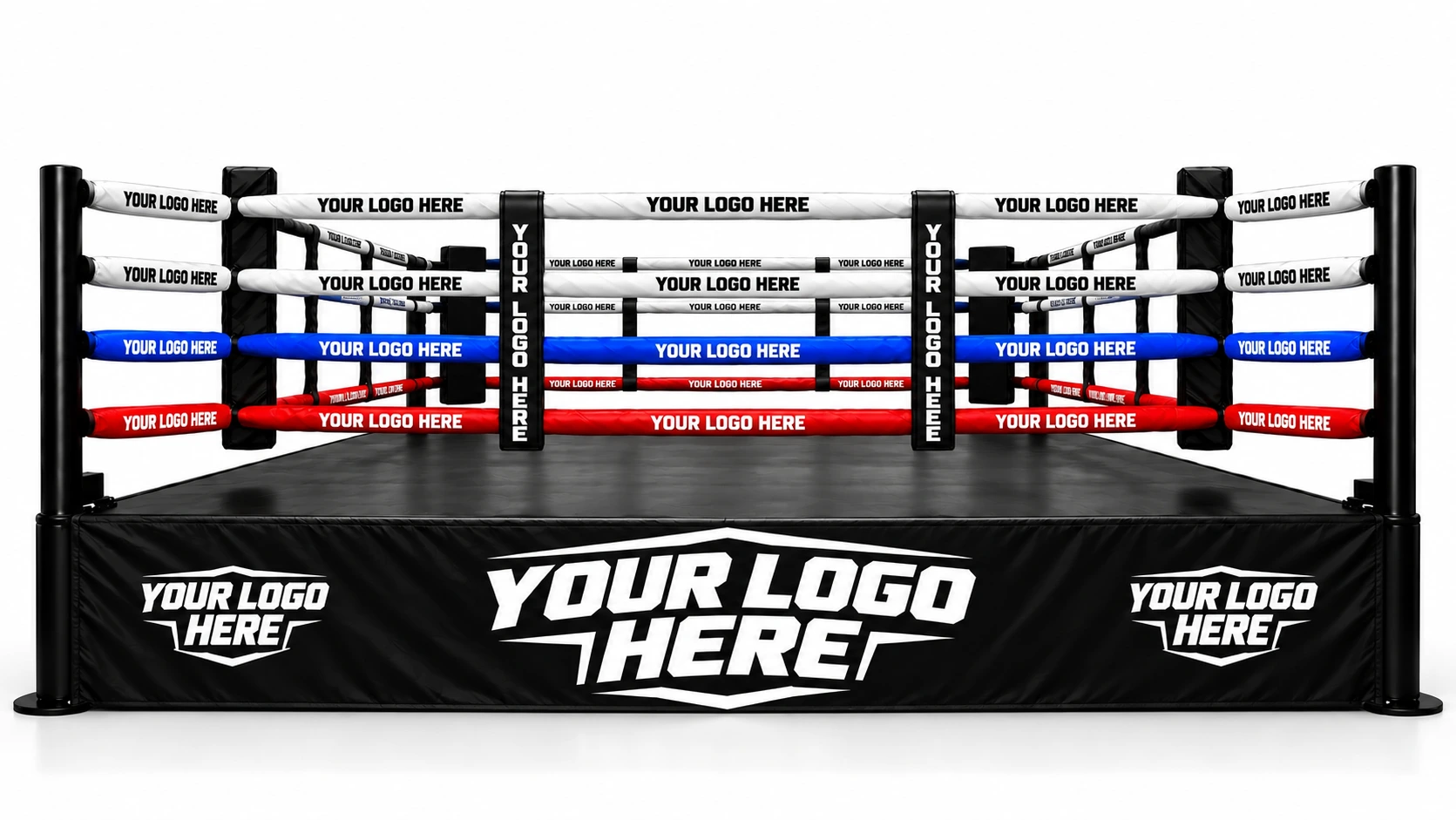
Ropes and rope covers: evenly spaced, properly tensioned, and covered. Rope covers and rope separators keep the look clean and the spacing even.
-
Corner pads and turnbuckle protection: padded corner pads, plus turnbuckle covers or turnbuckle wraps so no bare metal is exposed.
-
Post covers and skirts: padded post covers and ring skirts finish the apron and cover the frame.
-
Steps and extras: ask whether steps, stools, and assembly instructions are included or priced separately.
If you already own a sound frame, you do not always need a new ring. A complete boxing ring dressing kit can give an existing ring a full, matching look for an event.
Rules and Sanctioning in the USA
In the USA, the rules for a bout depend on who sanctions it. Professional events fall under the state athletic commission, and many follow the guidelines of the Association of Boxing Commissions. Amateur events usually follow USA Boxing or a local association. Between them, the rules can cover ring size, platform dimensions, rope count and height, padding, and corner equipment.
Because these rules differ by state and by level, the safest approach is simple: before you order, ask your commission or sanctioning body for their ring requirements, and give that list to your manufacturer. A good builder will tell you honestly whether a ring can be made to that standard.
Setup, Takedown, and Transport
For a promoter or touring event, how quickly a ring goes up matters almost as much as how strong it is. A ring that takes a full day and a crew of six to assemble costs you money every single event.
When you compare builders, ask how the frame goes together, how many people it takes, whether the parts are labeled, and whether the ring ships with assembly instructions. Also ask how it packs for transport and what the shipping method is. If you only set up once and leave it, assembly time matters less. If you move the ring between venues, it matters a lot.
Branding Your Competition Ring
On fight night, the ring is the most-photographed object in the building. It is also the best place to put your brand and your sponsors. Most branding goes on three places:
-
The canvas: your center logo, event name, and corner sponsor logos. We can print them or hand-paint a standout center logo.
-
The skirts: a clean strip of branding all the way around the apron. See our custom boxing ring skirts.
-
Sponsor pads and round cards: toblerone sponsor pads around the ring and round number cards for each round.
Plan the branding early, so the canvas, pads, and skirts are ordered together and match. You can see finished rings and dressings on our Our Work page.
How Much Does a Competition Boxing Ring Cost?
There is no single price, because a ring is built to a spec. The main things that move the cost are:
-
Ring size: bigger platforms need more steel, more deck, and more dressing.
-
Ring style: elevated, lowboy, and floor rings are built differently.
-
What is included: steps, canvas, skirts, pads, and covers can be bundled or priced on their own.
-
Branding: one logo is simpler than a full sponsor layout or hand-painted artwork.
-
Shipping and delivery: a large, heavy ring ships on a pallet or by freight, and the cost depends on distance.
The cheapest quote is rarely the best value. A ring that flexes, loosens, or wears out after a few events will cost you more in replacements and in your event's reputation. Compare the same things on every quote: frame specs, padding, rope system, canvas, what is included, and delivery.
For an exact price, send us your size, style, and branding details, and we will send a quote and a mockup before production. Standard production is typically 1 to 3 weeks, and we ship across the USA.
New, Used, or Rented?
-
New: the best choice if you run events regularly or want your own branding and a known specification.
-
Used: can save money, but you inherit unknown wear. Inspect the frame, the welds, and the deck in person. Replacing the canvas, pads, and covers on a sound frame is often a smart middle path.
-
Rented: makes sense for a one-off event, but you will not have your own branding and availability can be tight around busy dates.
Buying Checklist
-
Which sanctioning body or commission governs my events, and what ring requirements do they list?
-
What size do I need, and is it measured inside the ropes or by the platform?
-
Do I need an elevated ring, or would a lowboy or floor ring work?
-
Do I have the ceiling height, floor space, and clearance for the full platform and steps?
-
What exactly is included: frame, deck, padding, canvas, skirts, pads, covers, steps?
-
How fast does it assemble, how many people does it take, and how is it shipped?
-
What branding do I want on the canvas, skirts, and pads?
-
What is the production time, and does it fit my event date?
Frequently Asked Questions
What size is a competition boxing ring?
Most competition rings measure between 16 and 20 ft inside the ropes, and some commissions allow up to 24 ft. The full platform is larger because of the apron, often around 4 ft larger than the fighting area.
What is the difference between platform size and inside-the-ropes size?
Inside the ropes is the area where the fighters actually box. The platform size includes the apron that extends past the ropes. A ring described as a 20 ft platform will usually have about 16 ft inside the ropes, so always ask which measurement a builder is quoting.
How many ropes does a competition ring have?
Rope count and height are often set by the sanctioning body, so check their rules. Your ring dressing should match. We make turnbuckle wraps for both 3-rope and 4-rope rings.
Can I use my gym ring for a sanctioned event?
Only if it meets the size, padding, and platform requirements of the commission or sanctioning body for that event. Check before the event, not on the night.
Should I buy an elevated, lowboy, or floor ring?
For events with spectators, an elevated ring is the standard. For daily training, a lowboy or floor ring is often more practical. A gym that does both usually benefits most from an elevated ring.
How long does it take to build a custom boxing ring?
Custom rings are made to order. Our typical production time is 1 to 3 weeks after the details are confirmed, but it depends on size and branding, so tell us your event date when you ask for a quote.
Can I put my logo and sponsors on the ring?
Yes. Logos and sponsor artwork can go on the canvas, skirts, corner pads, and sponsor pads, and we send a mockup for approval before production.
Final Thoughts
A competition boxing ring is the centerpiece of your event, so choose it like one. Get the size and rules confirmed first, pick the style that suits your room and your crowd, check exactly what is included, and compare value instead of just price.
If you are planning an event or outfitting a gym, request a quote for a custom boxing ring and we will help you specify the size, style, and branding. You can also read our broader guide to the best boxing rings for gyms and events and see what other buyers say on our reviews page.