Best Boxing Rings for Gyms and Events: A USA Buyers Guide
13 min read
Buying a boxing ring looks simple until you actually have to do it. Then the questions pile up. What size fits the room? Platform or floor? Will it pass inspection for a sanctioned card? What happens to the canvas and padding after two years of daily sparring?
The best boxing rings are not the ones with the flashiest colors or the lowest freight quote. They are the rings that fit your floor plan, suit how you use them, and still feel solid after thousands of rounds. This guide walks through what actually matters when choosing a boxing ring for a gym or an event: types, sizes, clearances, materials, dressing, and cost, so you buy once and buy right.
If you already know what you need, you can browse our range of custom boxing rings or the full boxing ring accessories catalog. If not, read on.
What Makes a Boxing Ring "Best"?
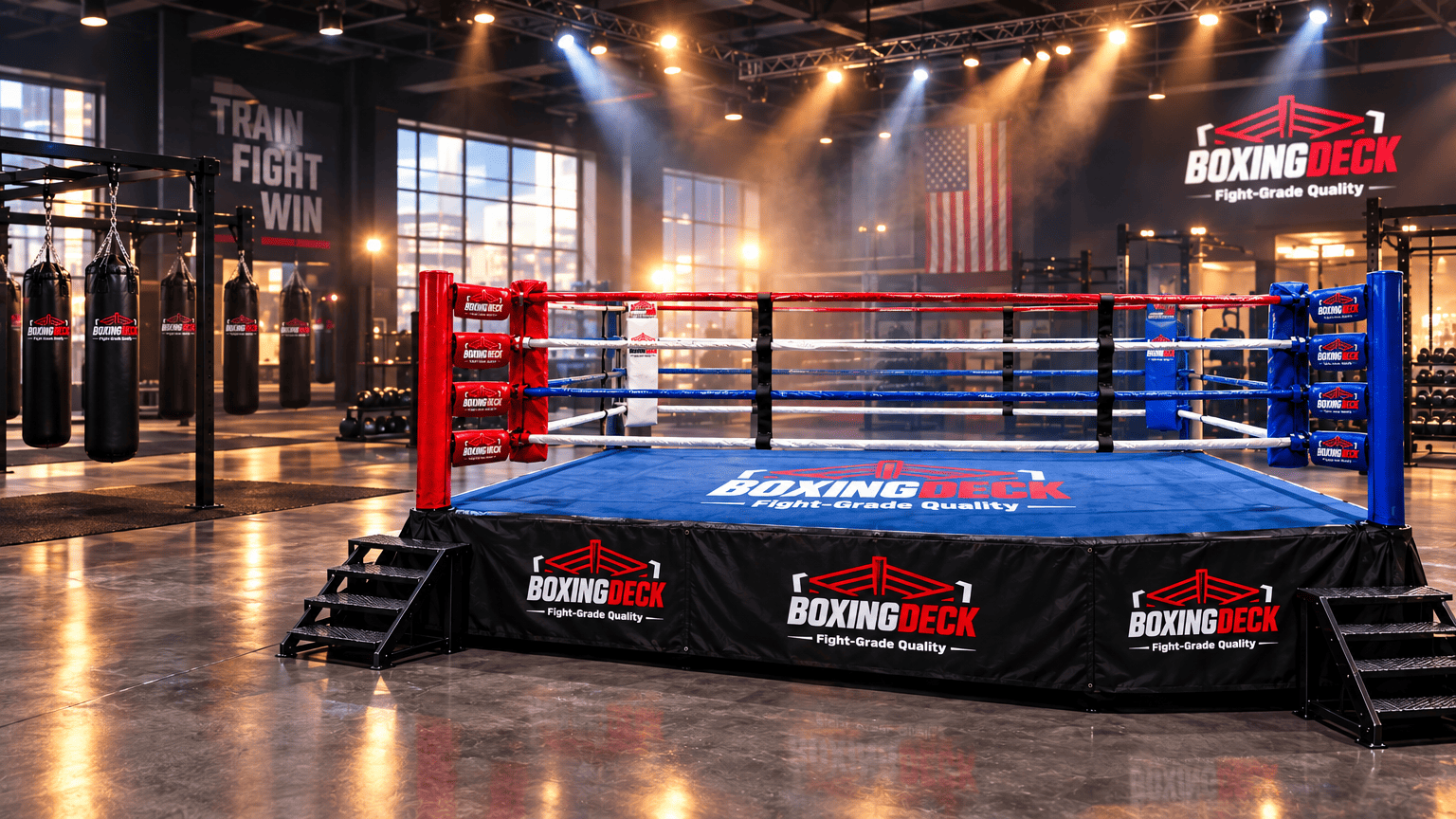
There is no single best ring for everybody. A boxing gym running classes from morning to night has different needs than a promoter building a camera-ready ring for fight night. But a good commercial ring shares the same core qualities, whatever it is used for.
A rigid steel frame. The frame carries everything: the deck, the posts, the rope tension, and the weight of fighters moving at speed. A frame that flexes makes the whole ring feel dead and, over time, loosens at the joints. Fighters notice it in their footwork. Coaches notice it when the ropes go slack.
A consistent deck. The surface should respond the same way in every corner. Soft spots, uneven plywood, or gaps between panels change how a fighter plants a foot, and that is a safety problem as much as a comfort one.
Properly tensioned ropes and padded turnbuckles. Ropes and corner hardware are the parts fighters touch most. They should be secure, evenly spaced, and covered so no bare metal is ever exposed. Good rope covers and turnbuckle covers do a lot of this work.
Dense padding under a quality canvas. The padding takes the impact. The canvas holds it in place and gives the ring its look. Both should be built for repeated use, not for a single weekend.
If you are comparing quotes, start with these four. Cosmetic details such as color and logo placement matter, but only after the structure is right.
Types of Boxing Rings: Platform, Floor, and Competition
Most buyers are choosing between three formats. Here is how they compare at a glance.
|
Ring type |
Best for |
Main advantage |
Main trade-off |
|---|---|---|---|
|
Platform (raised) ring |
Boxing gyms that also host shows, event promoters |
Professional look, better sightlines, classic fight feel |
Needs more space, ceiling height, and steps for access |
|
Floor ring |
Training-focused gyms, multi-use fitness facilities |
Easy access, lower profile, flexible room layout |
Less visual impact for spectators |
|
Competition / event ring |
Promoters, amateur and pro shows, touring events |
Clean presentation, built for setup and teardown |
Needs stricter standards and more careful handling |
Platform boxing rings
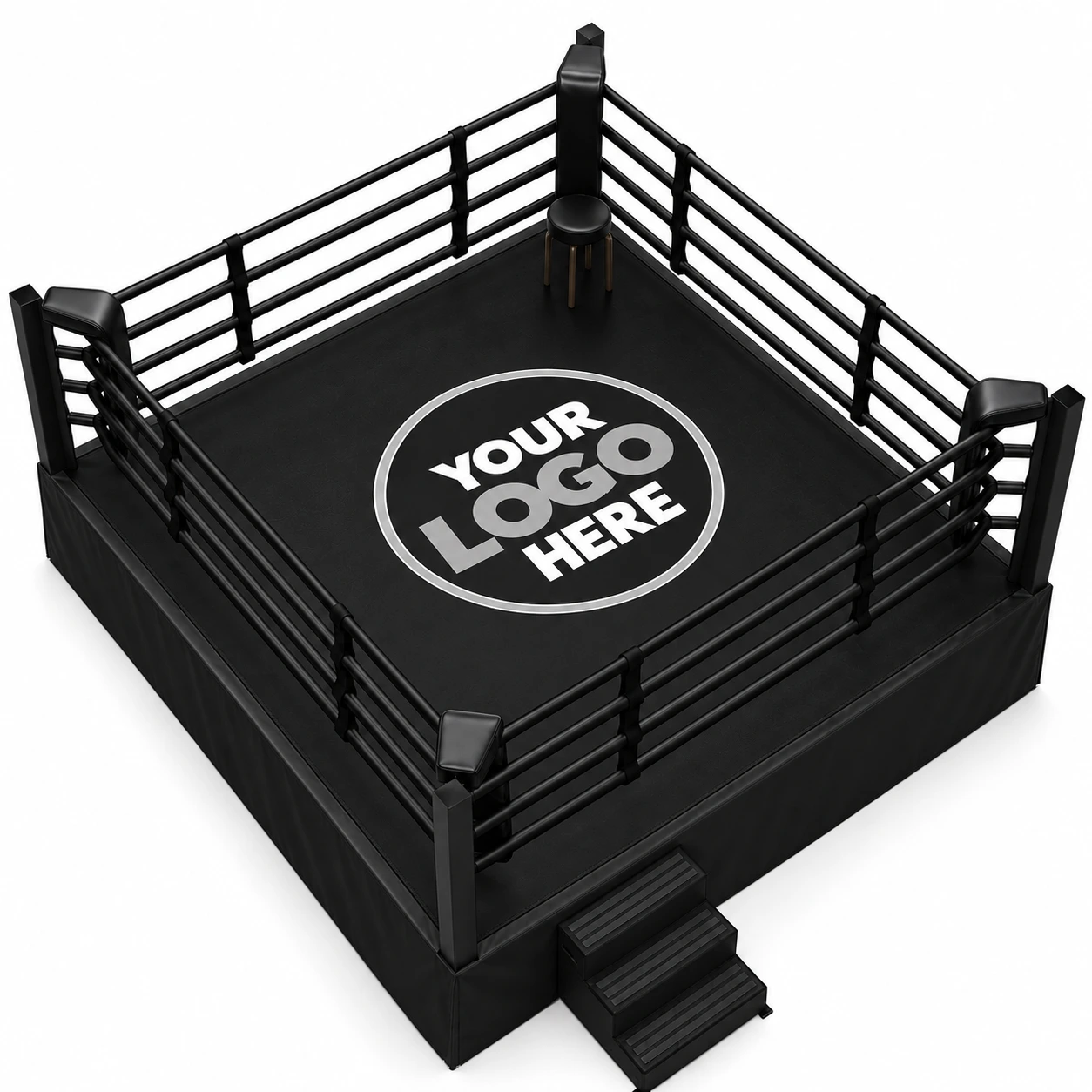
A platform ring sits on a raised deck, usually with an apron around the ropes and steps in the corners. This is the format most people picture when they think of boxing. The raised deck gives the ring presence on the gym floor and makes it feel like a real fight surface. For gyms that run sparring nights or in-house shows, it also separates ring work from bag work and open floor space.
The trade-off is footprint. You need ceiling height, safe space on all sides, and room for steps. If the room can handle it, a platform ring is usually the strongest all-round choice.
Floor boxing rings
Floor rings sit low or directly on the gym floor. They are easier to get into, easier to fit into a multi-purpose room, and well suited to facilities training everyone from beginners to active fighters. If your daily routine is rounds and classes rather than event presentation, a floor ring is often the practical pick.
Low-profile does not mean light-duty. A floor ring still needs commercial framing, correct rope setup, solid padding, and a durable cover. Buy it with the same seriousness as a raised ring.
Competition and event rings
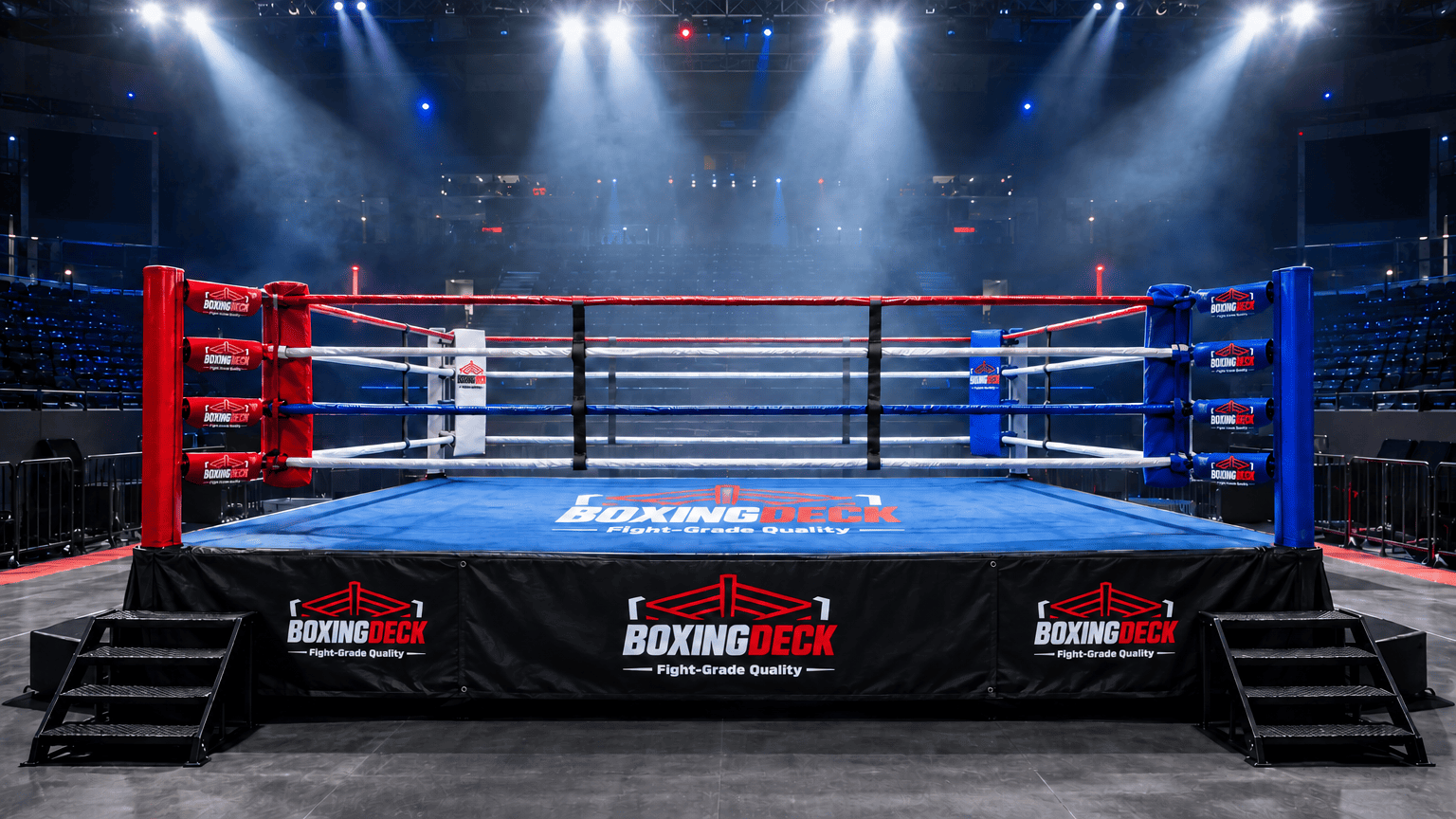
For shows, presentation matters almost as much as structure. A competition ring has to go up clean, stay tight, and look sharp under lights from the first bout to the main event. If it will be built and taken down repeatedly, the hardware, rope system, and frame joints need to survive handling and transport without becoming a maintenance headache. Event organizers also tend to care about extras like sponsor toblerone pads and round number cards, which add polish on fight night.
Boxing Ring Sizes: What Actually Fits
Ring size is measured inside the ropes, and the full platform is larger because of the apron that extends past the ropes. This is the most common mistake first-time buyers make: they measure the room for the ring size and forget the platform and clearance around it.
Most sanctioned bouts take place in rings between roughly 16 and 20 feet inside the ropes. Always confirm the exact requirement with your state athletic commission or the sanctioning body for the events you plan to host, because rules differ by level and by state.
|
Ring size (inside ropes) |
Typical use |
Notes |
|---|---|---|
|
16 ft x 16 ft |
Smaller gyms, training, amateur shows |
Compact, suits tighter rooms |
|
18 ft x 18 ft |
General gym and amateur events |
Popular middle ground |
|
20 ft x 20 ft |
Larger gyms, professional and event use |
Most room to move, needs the biggest space |
|
24 ft x 24 ft |
Often used for combat sports beyond boxing |
Rarely needed for a standard boxing gym |
As a rough guide, add several feet to each side for the apron and platform when you measure the room. A 16-foot ring, for example, needs a noticeably larger footprint than 16 feet once the apron is included.
Bigger is not always better. A ring that dominates the room hurts traffic flow, squeezes out bag space, and makes coaching harder. A ring that is too small makes sparring feel cramped and limits movement. Choose the size that matches your fighters and your floor, not the biggest one that technically fits.
Once you have the size, you will need a canvas to match. Our custom boxing ring canvas is available from 12x12 up to 28x28 ft, and our guide on how to measure a boxing ring for a custom canvas shows exactly where to take each measurement.
Plan the Space Before You Order
The ring itself is only part of the project. Three things decide whether it works in your building.
Clearance around the platform. Coaches, athletes, cleaners, and spectators all need room to move. If your gym is already tight, forcing a large platform into it creates problems that never go away. Walk the layout with tape on the floor before you order.
Ceiling height. A raised platform plus the ring posts needs real vertical room, and lighting, fans, and ductwork can get in the way. Measure to the lowest obstruction, not to the ceiling itself.
Floor condition and access. A level, solid floor makes assembly and long-term stability much easier. Think about where the steps go and how people will enter and exit on busy nights.
If you also run heavy bags, plan their positions at the same time so the ring does not block your training flow. For a full opening checklist, see our boxing ring equipment checklist for a new gym.
Materials and Build Quality: What to Look For
Cheaper rings usually cut corners in places you cannot see in a product photo. Use this checklist when comparing options.
-
Frame: heavy-duty steel with clean, solid welds. Ask about tube thickness and how the frame is braced.
-
Deck support: the structure under the deck should keep the surface flat and consistent across the full ring.
-
Ring posts: secure and properly padded. Padded ring post covers protect fighters and hide wear on older posts.
-
Ropes: thick, evenly spaced, and covered so they are comfortable on contact and hold tension over time. Rope separators keep spacing even.
-
Padding: dense foam that recovers after impact instead of flattening in a few months. A quality boxing ring underlay in 15mm or 20mm foam adds shock absorption under the canvas.
-
Canvas and covers: tight fit, cleanable surface, and material that handles sweat, tape, and constant foot traffic.
-
Hardware: consistent bolts and fittings that you can service and replace without special tools.
Weak hardware and low-grade padding are the shortcuts that show up first in cheap rings. Ask to see specifications in writing, not just photos.
Ring Dressing: Canvas, Corner Pads, Skirts, and More
The dressing is what fighters, coaches, and spectators actually see and touch. It affects safety, brand image, and how long the ring lasts. It is also the easiest part of a ring to upgrade without replacing the frame.
-
Canvas: the cover over the padded deck. A good boxing ring canvas should fit tight, stay in place during movement, and clean up easily. US buyers can also look at a boxing ring canvas in the USA for local sourcing and shipping.
-
Corner pads: these protect fighters at the points of highest contact. Quality boxing ring corner pads should be dense, well attached, and sized to match your posts.
-
Turnbuckle covers and wraps: padded protection over exposed corner hardware. Choose between turnbuckle covers and turnbuckle wraps depending on whether your ring uses three or four ropes.
-
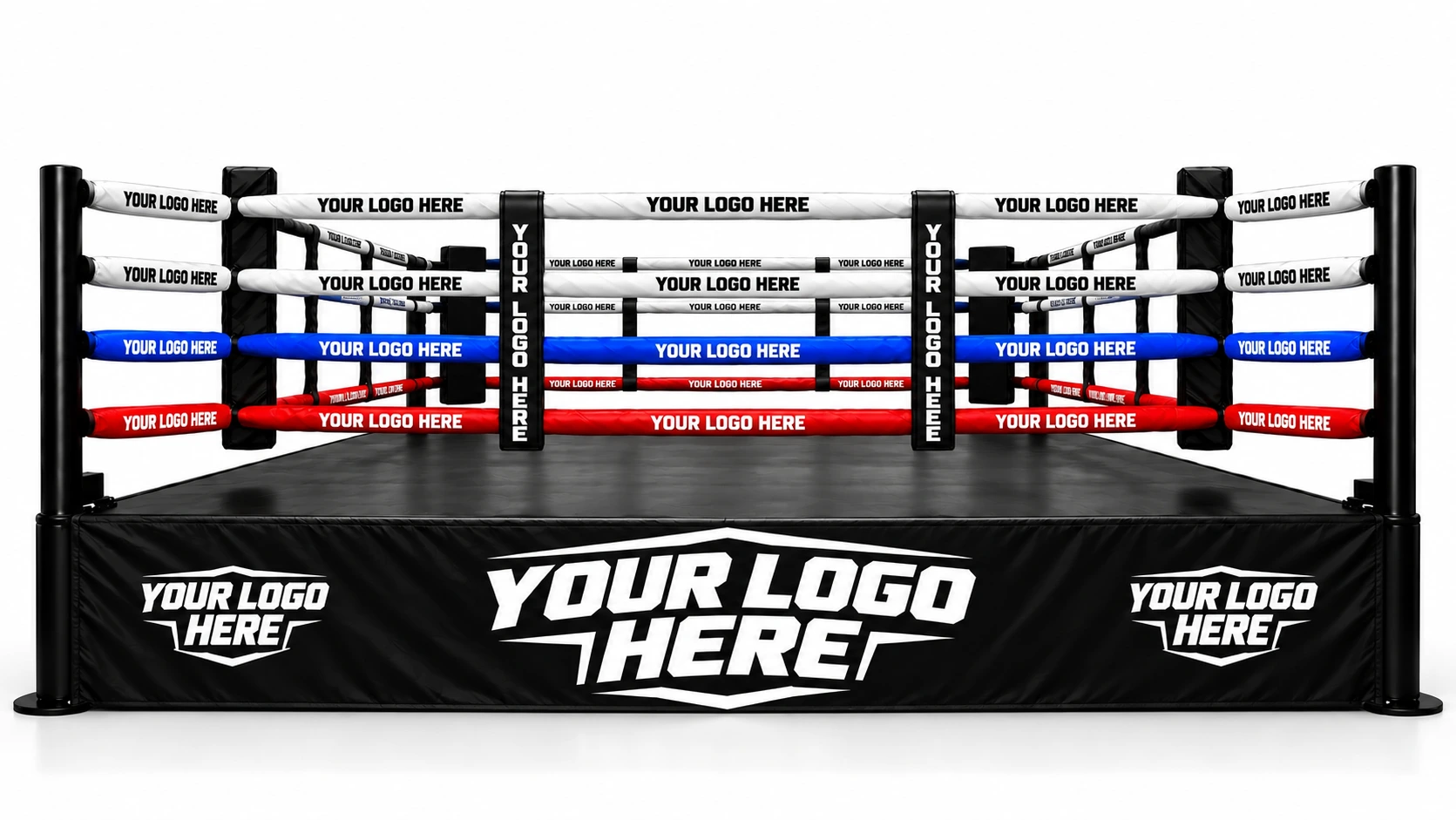
Skirts: boxing ring skirts frame the ring visually and are the best place for gym branding or sponsor logos.
-
Complete kits: if you are outfitting a full ring, a boxing ring dressing kit keeps colors and materials consistent instead of piecing items together from different sources.
Color, logo placement, and finish are not just decoration. A ring that matches your gym's brand and looks right on camera makes every event feel more professional. For a deeper look at what to buy first, read our guides on the 10 essential boxing ring accessories every professional gym needs and custom boxing ring accessories for gyms, clubs and events.
Custom, Stock, or Used: Which Route Makes Sense?
Stock rings are the fastest and easiest option when standard sizes and colors work for you.
Custom boxing rings make sense when you have a specific room, brand colors, unusual dimensions, or event requirements. A custom build lets the ring fit your operation instead of forcing your operation to fit a generic spec. You can see examples of finished ring setups on our Our Work page.
Used rings can save money up front, but you inherit unknown wear, mismatched parts, and possible safety issues. If you go this route, inspect the frame, the welds, and the deck support in person before you pay. Replacing the canvas, corner pads, and rope covers on a sound used frame is often a smart middle path.
If a ring will be a central part of your business, custom or well-specified commercial equipment usually pays off in fewer repairs and fewer surprises.
Price vs. Value: What a Ring Really Costs
A low upfront price can be expensive equipment in disguise. The real cost of a boxing ring includes its lifespan, the cost of replacement parts, the downtime when something breaks, and how well it holds up under your actual workload.
A ring that starts loosening, wearing unevenly, or looking worn out after a short time wipes out whatever you saved at purchase. For a working gym or event business, a boxing ring is core infrastructure, not a decorative piece.
When you compare quotes, compare the same things on each: frame specifications, padding type, rope system, canvas quality, shipping, and what is included in the price. Buying direct from a manufacturer also usually means better communication and easier support when you need a replacement part or a custom change. Boxing Deck has more than 25 years of manufacturing experience behind its ring equipment, and you can read what customers say on our reviews page.
Which Ring Fits Which Buyer?
-
Daily-training boxing gym: a commercial floor or platform ring built for repeated use and simple maintenance.
-
Gym that also hosts shows: a platform ring in a size that works for both sparring and event presentation.
-
Promoter or event company: a competition-style ring that sets up cleanly, travels well if needed, and looks right under lights.
-
Youth or community program: a lower-profile ring with solid padding and easy access for newer athletes.
-
Mixed combat sports facility: a setup that balances floor space, access, and shared use with other training areas.
The right answer is the ring built for the job you expect it to do every single week.
A Quick Buying Checklist
Before you place an order, make sure you can answer these questions:
-
What ring size do I need, measured inside the ropes?
-
What is the full platform footprint, and does it fit with safe clearance on all sides?
-
Will I host sanctioned events, and what does the sanctioning body require?
-
How often will the ring be used, and by whom?
-
Do I need to build and tear down the ring regularly?
-
What are the frame, deck, rope, and padding specifications in writing?
-
What dressing and branding do I need, and is it included?
-
What does shipping, installation, and support look like?
Frequently Asked Questions
What is the best boxing ring size for a gym?
Most gyms choose between 16 x 16 and 20 x 20 feet inside the ropes. Smaller rooms usually do well with 16 or 18 feet, while larger gyms and event spaces often go to 20 feet. Remember that the platform and clearance add to the total footprint.
What is the difference between a platform ring and a floor ring?
A platform ring sits on a raised deck with steps and an apron, giving it a professional, fight-night look. A floor ring sits low or on the floor, which makes it easier to access and easier to fit into multi-use spaces.
How much space do I need for a boxing ring?
You need the ring size plus the apron and platform, plus enough clearance for people to move safely around it. Mark out the full footprint on the floor and check ceiling height before you order.
Can I use a gym boxing ring for official events?
Only if it meets the requirements of the sanctioning body or state athletic commission for that event. Standards vary, so confirm size, padding, and rope specifications before you commit.
How long does a commercial boxing ring last?
It depends on build quality, usage, and maintenance. A well-built steel-frame ring with quality padding and canvas can last for many years, especially if you replace the canvas and corner pads as they wear.
Should I buy a custom boxing ring?
Custom makes sense if you have unusual room dimensions, specific brand requirements, or event needs that standard sizes do not cover. For simple training setups, a quality stock ring can be enough.
Final Thoughts
The best boxing ring is the one that matches your space, your fighters, and your business, and then holds up day after day. Get the size and clearance right, insist on solid structure and quality dressing, and compare total value instead of just price. Do that, and the ring will earn its floor space every day.
If you want help specifying a ring, canvas, corner pads, or a full dressing kit for your gym or event, contact the Boxing Deck team and we will help you build the setup that fits.